If you’re planning a new driveway in Williamsport, the material you choose matters just as much as who installs it. Asphalt and concrete are both proven options for Maryland homes, but they behave differently once winter sets in, once they start to show wear, and once it comes time to make a repair. Homeowners often assume one material is simply better, but the right choice really depends on your budget, how long you plan to stay in the home, and how the driveway gets used day to day. Below, we break down the real differences between asphalt and concrete so you can make a confident decision, backed by more than twenty years of hands on paving and construction experience serving Williamsport and the surrounding tri state area.
The Real Difference Between Asphalt and Concrete
Asphalt and concrete are both durable paving materials, but they’re built and behave in very different ways. Asphalt is a mix of stone, sand, and a petroleum based binder called bitumen. It’s mixed hot, spread across a compacted stone base, and rolled while it’s still warm enough to bond into a solid, slightly flexible surface. Concrete, on the other hand, is a mix of cement, sand, aggregate, and water that’s poured wet and left to cure into a rigid slab over several days.
That difference between flexible and rigid drives almost everything else in this comparison. Asphalt can shift slightly as the ground moves beneath it, which helps it resist certain types of cracking. Concrete holds a fixed shape once it cures, which gives it a long lifespan in the right conditions, but makes it more dependent on properly placed expansion joints to handle that same ground movement.
There’s also a visual difference worth considering. Asphalt has a uniform, dark finish that many homeowners like for a clean, modern look, especially right after installation. Concrete can be finished a few different ways, from a smooth broom finish to a lightly textured surface, and it tends to hold a lighter, more neutral color throughout its life. Some homeowners also like that concrete can be tinted or stamped for a more custom appearance, while others prefer asphalt’s simplicity and the way it hides tire marks and minor staining over time.
Neither material is inherently better. The right choice depends on your budget, how long you plan to stay in your home, your tolerance for periodic maintenance, and the look you want for your property. The rest of this guide walks through those tradeoffs in more detail so you can weigh them against your own priorities.
Comparing Upfront Cost and Long Term Value in Williamsport
Cost is usually the first question homeowners ask, and it’s a fair one. Asphalt driveways typically cost less to install than concrete driveways of the same size. The material itself is generally less expensive, and the installation process moves faster since asphalt doesn’t need days of curing time before it can handle light foot traffic.
Concrete usually costs more upfront. Part of that cost comes from the material itself, and part comes from the labor and time involved in forming, pouring, and finishing a slab correctly. That higher initial investment often comes with a tradeoff, though: concrete tends to need fewer major repairs over its lifespan when it’s installed properly.
If you’re planning to stay in your home for decades, that long term durability can make concrete worth the higher initial cost. If you’re working with a tighter budget or you’re not planning to stay in the home as long, asphalt often makes more financial sense. We offer asphalt paving and installation as well as concrete flatwork and installation, so we can give you real numbers for your specific project instead of a generic estimate.
Keep in mind that cost also depends on the size of your driveway, the condition of the ground underneath, and whether any old material needs to be removed first. We’ll walk your property, take real measurements, and give you a clear number before any work begins, so you can compare your options with confidence instead of guessing.
How Each Material Handles Maryland’s Weather
Maryland’s climate puts real stress on any driveway. Winters bring freeze and thaw cycles that can crack pavement that isn’t installed correctly, and summers bring intense heat that can soften asphalt if the mix or base isn’t right. Spring rains add another layer of stress, since water that isn’t properly drained away from the driveway can work its way under the surface and weaken it from below.
Asphalt’s flexibility works in its favor here. As the ground freezes and thaws, asphalt can shift slightly without cracking as easily as a rigid material would. That said, asphalt can soften in extreme heat, which is part of why proper installation and mix selection matter so much. A mix that isn’t suited to our climate can rut or become soft under heavy vehicles during the hottest part of summer.
Concrete holds up very well to heat, since it doesn’t soften the way asphalt can. Its rigidity becomes a bigger factor in winter, though. Without properly placed expansion joints, freeze and thaw cycles can cause a concrete slab to crack in ways that are harder to repair without it showing. The number and placement of those joints has to be planned out before the concrete is ever poured, not added as an afterthought.
In both cases, the material on top matters less than what’s underneath it. A driveway with a properly graded, compacted stone base will outperform a poorly prepared base every time, regardless of which surface material you choose. We handle grading and site preparation as a standard part of every paving and driveway project, since skipping that step is one of the most common reasons driveways fail early in this climate. Whichever material you choose, ask your contractor how they’re preparing the base before they ever talk about the surface on top.
Maintenance and Repairs Over Time
Both materials require some ongoing care, just on different schedules and in different ways.
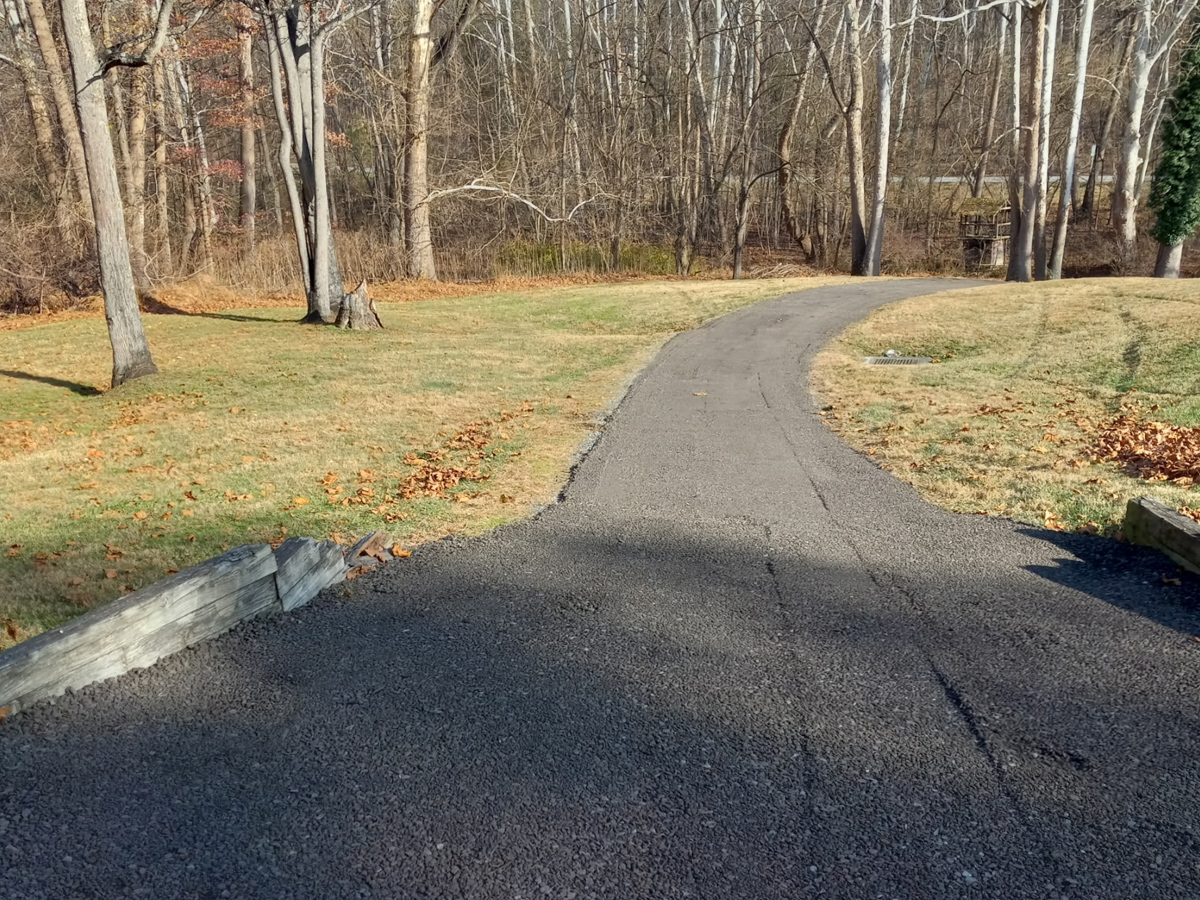
Asphalt needs to be sealcoated every two to three years to protect it from UV rays, water penetration, and the oxidation that causes surfaces to fade and become brittle over time. Skipping sealcoating doesn’t cause immediate damage, but it shortens the driveway’s lifespan and makes small cracks more likely to spread.
Concrete doesn’t follow the same sealcoating schedule, but it isn’t maintenance free either. Concrete benefits from periodic resealing to resist staining, and any expansion joints should be inspected and recaulked as they age.
When repairs are needed, the two materials behave differently:
- Asphalt patches blend in more easily, since a resurfaced or overlaid section can look nearly seamless with the surrounding driveway.
- Concrete repairs are more visible, since a cracked or settled section usually needs to be removed and repoured rather than patched.
- Asphalt tends to show minor wear sooner, but that wear is typically easier and less expensive to address.
- Concrete shows fewer minor issues over time, but the repairs it does need tend to be bigger jobs.
We offer asphalt repair and maintenance to help extend the life of an existing driveway, whether that means crack filling, patching, or a fresh coat of sealcoat. Staying ahead of small issues is almost always less expensive than waiting until a driveway needs major work.
Getting an Honest Recommendation for Your Driveway Project
There’s no universal right answer between asphalt and concrete. The best choice depends on details that are specific to your home, your budget, and how you plan to use the driveway. A household with two cars and light daily use has different needs than a property that regularly sees delivery trucks, trailers, or heavier equipment.
If you’re replacing an existing driveway rather than starting from scratch, that changes the equation too. A driveway that’s cracked, sunken, or draining poorly might need full driveway paving and replacement rather than a simple resurfacing, regardless of which material you choose next. In some cases, the existing base is salvageable and only the surface needs attention. In others, the whole system needs to come out and start over.
Our approach is straightforward. We’ll walk your property, ask about your budget and how long you’re planning to stay in the home, and give you our honest opinion based on what we’d actually recommend, not whichever option costs more. If you want our take, we’ll give it to you directly. If you already know which material you prefer, we’ll build it exactly the way you want and note your preference in the contract so there’s no confusion later about what was discussed.
We’ve brought more than twenty years of hands on paving and construction experience to homeowners across Williamsport and the surrounding tri state area, and that experience shapes every recommendation we make. We measure what we quote, we prepare the base properly every time, and we won’t cut corners just to save a step. A short conversation now can save you from a costly mismatch later.
Quick Comparison: Asphalt vs. Concrete Driveways
If you’re still weighing your options, here’s a quick side by side recap:
- Upfront cost: Asphalt typically costs less to install; concrete typically costs more.
- Weather performance: Asphalt flexes with freeze and thaw cycles; concrete holds its shape but depends on properly placed expansion joints.
- Maintenance: Asphalt needs sealcoating every two to three years; concrete needs less frequent but different upkeep, like joint recaulking.
- Repairs: Asphalt patches blend in easily; concrete repairs are more visible and usually involve repouring a section.
- Best for: Asphalt often fits tighter budgets and shorter term homeowners; concrete often fits homeowners planning to stay long term who want maximum durability.
No matter which column matches your priorities, the material is only half the equation. Proper base preparation, accurate measurements, and an honest, no pressure quote matter just as much as the surface you choose.
Get a Free Quote for Your Williamsport Driveway
Ready to move forward, or still deciding between asphalt and concrete? Either way, we’re happy to help. We’ll walk your property, answer your questions honestly, and give you a clear, no pressure quote for your driveway project. We serve homeowners throughout Williamsport and the surrounding tri state area, and we’re glad to talk through your options before you decide.
Get a Free Quote today and let’s talk through what makes sense for your home, your budget, and your plans for the years ahead. No matter which material you choose, you’ll get straightforward answers and quality work built to last in Maryland’s weather.
Need Help with Your Paving or Construction Project?
Four Seasons Construction & Paving works with homeowners and small business owners across the tri-state area to deliver high-quality asphalt paving, driveways, custom decks, and home remodeling with honest recommendations and expert craftsmanship. Connect with our team today to discuss your project needs and get a free quote.
Like this article? Spread the word!
Related Posts
Concrete vs. Asphalt Driveway: Which Is Right for Your Hagerstown Home?
Comparing concrete vs. asphalt driveways in Hagerstown, MD? Get honest advice on cost,…
How Much Does an Asphalt Driveway Cost in the Tri-State Area? A Local Cost Guide
How much does an asphalt driveway cost in MD, WV & PA? See 2026 price ranges, cost…
How Much Does an Asphalt Driveway Cost in the Tri-State Area? A Local Cost Guide
How much does an asphalt driveway cost in MD, WV & PA? See 2026 price ranges, key cost…